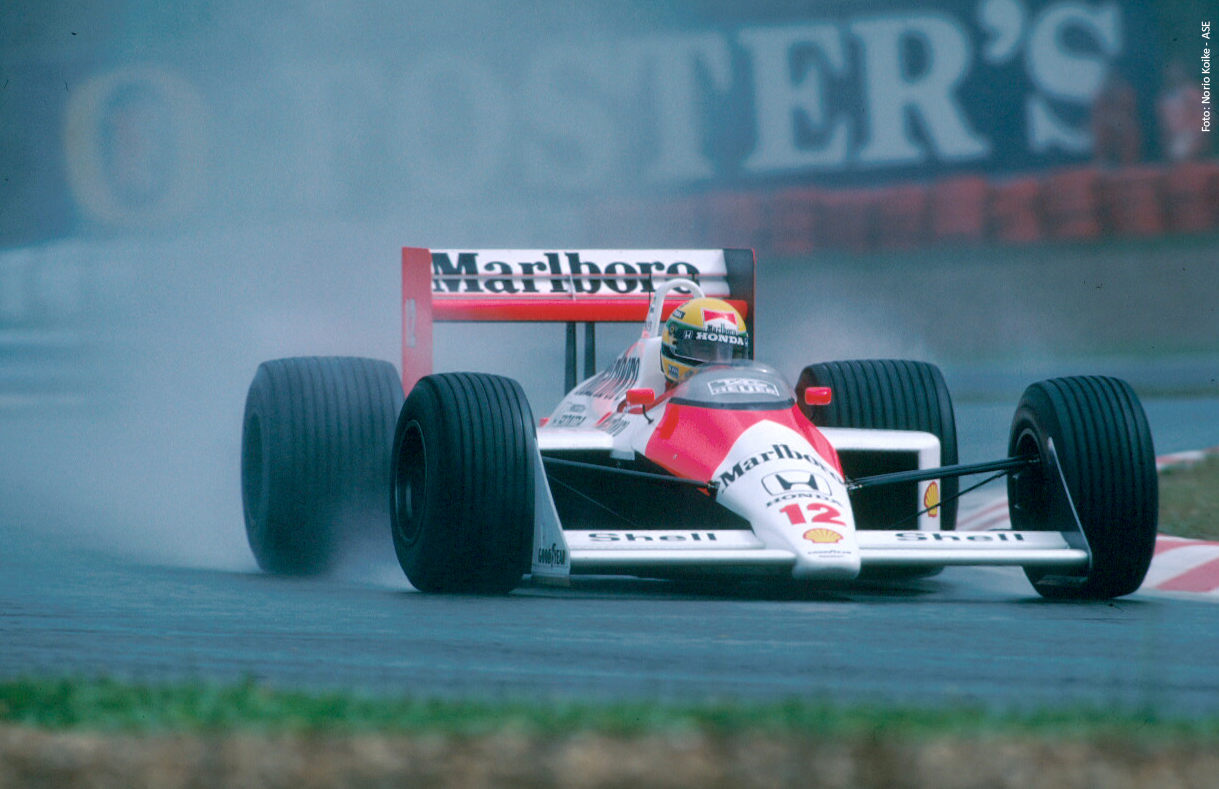
Ayrton Senna remains one of Formula 1’s defining figures not only because of the numbers, but because of how he raced and what he represented in high-pressure moments. His legacy still shapes how modern champions are judged.
Why Senna still matters in modern F1
Senna’s prime years arrived in an era with intense competitive pressure, limited margins, and relentless qualifying demands. His edge was not a single trait, but a complete profile: one-lap speed, race-day intensity, and a refusal to concede psychologically.
That combination built a benchmark that still appears in current debates about all-time greats.
For rivalry context, compare careers in Senna vs Prost.
The title years and the pressure curve
His first title in 1988 established the ceiling. The following championship battles, especially against Alain Prost, showed how thin the line was between precision and chaos in that era.
Across his title seasons, Senna combined speed with strategic resilience. Even when race pace across teams converged, he repeatedly found decisive moments in qualifying and critical race phases.
Legacy beyond statistics
Senna’s influence also extended beyond pure performance. His discipline, emotional intensity, and public impact turned him into a figure larger than race outcomes. For many fans, he became the reference point for what commitment in Formula 1 looks like.
Archive video
Video source: YouTube (watch original)
Editorial take
Senna’s greatest legacy is not nostalgia. It is standards. Every generation produces fast drivers, but very few reset the emotional and competitive bar for everyone after them.
Bottom line
Ayrton Senna’s history is not a closed chapter in Formula 1. It remains an active reference model for excellence under pressure, and that is why his name still carries unusual weight decades later.
Source: Formula1.com context coverage, Wikimedia Commons image source, and YouTube archive feature.